The Definitive Guide
2026
The Art of Choosing
Premium Marble
A Connoisseur's Guide for Discerning Homeowners
Everything you need to know before investing in premium marble.
From Italian masterpieces to rare exotics — make a choice
worthy of your home.
Vogue Marmi
Curators of Fine Stone
-
01
Why Marble? The Timeless Investment
3
-
02
The World's Finest Marbles
5
-
03
Choosing Marble by Application
9
-
04
Understanding Marble Finishes
11
-
05
How to Verify Authentic Premium Marble
13
-
06
Living with Marble — Care & Maintenance
15
-
07
FAQs from Premium Marble Buyers
17
-
08
Your Marble Selection Checklist
19
Marble is not a surface. It is a statement of taste that outlives generations.
— Vogue Marmi
2
You've already decided on marble. That decision itself speaks to your taste — marble has adorned the world's most celebrated spaces for over 3,000 years. From the Taj Mahal to the floors of Italian palazzos, no other material carries the same weight of beauty and legacy.
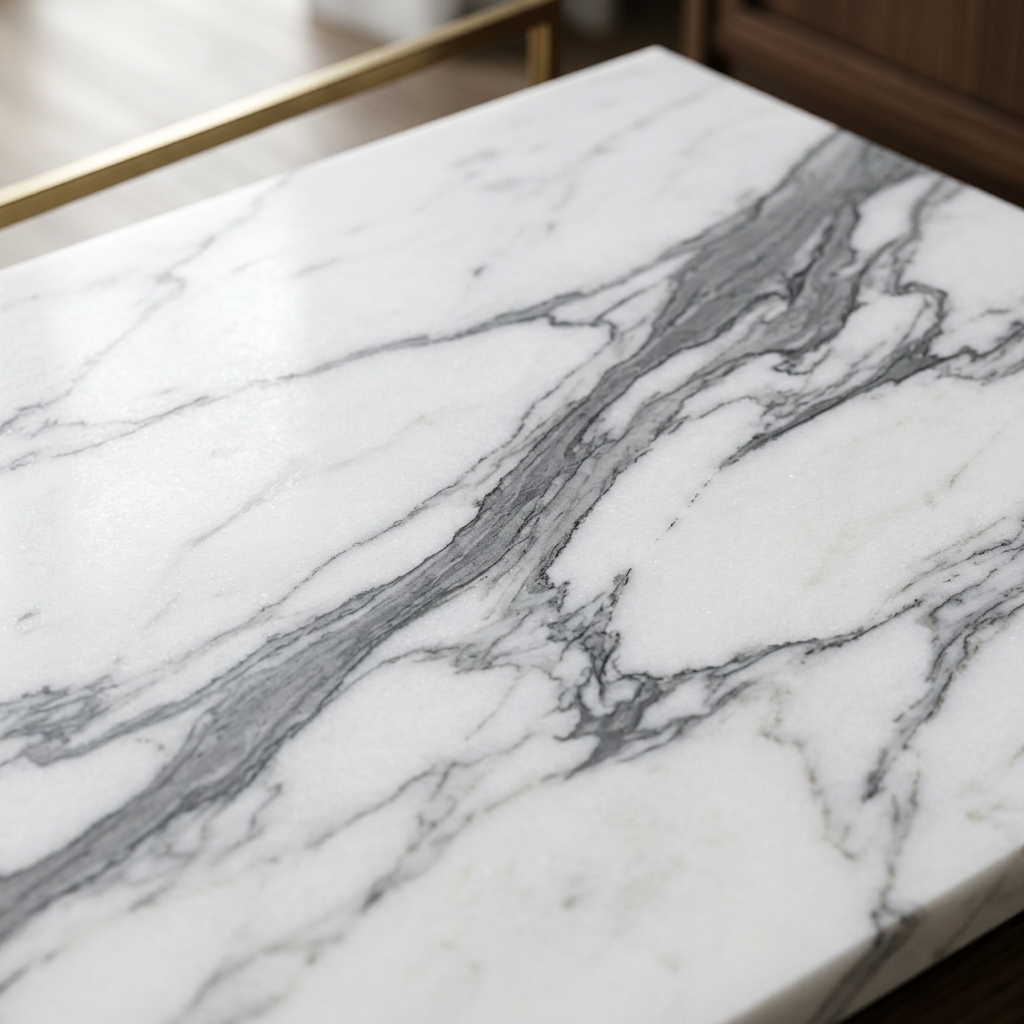
Premium Statuario marble slab — pure white with elegant grey veining
The Marble Difference
What sets marble apart from every other surface material is its origin story. Marble is metamorphic limestone — the result of millions of years of intense heat and pressure deep within the earth. This geological process transforms ordinary calcium carbonate into crystalline structures of extraordinary beauty.
Every single slab is one of a kind. The veining patterns you see are the fingerprints of geological forces — mineral deposits, iron oxides, clay, and other elements that were present during formation. No two slabs from the same quarry, or even the same block, are identical. No engineered material can replicate this. What you get with marble is a piece of natural history, millions of years in the making, that exists nowhere else on earth.
Why Premium Marble?
Not all marble is equal. The difference between a standard marble and a premium Statuario or Calacatta Viola is like the difference between a mass-produced print and an original painting. Both hang on a wall, but only one takes your breath away.
Premium marble offers qualities that standard marble simply cannot match:
What Sets Premium Marble Apart
- Deeper, more dramatic veining character that creates visual movement
- Rarer colorways — from pure whites to violet-streaked exotics
- Superior translucency that catches and plays with light
- Better structural integrity and denser crystalline composition
- Provenance from world-renowned quarries with centuries of heritage
A Vogue Marmi Perspective
We've curated marble from quarries across four continents. The right premium marble doesn't just look beautiful — it transforms the energy of a space. It's the difference between a house and a home that takes your breath away.
Marble is not for people who want perfection. It's for people who understand that beauty and life leave their marks.
— Vogue Marmi
3

The Taj Mahal — Makrana marble, standing resplendent after over 400 years
When you choose premium marble, you're not simply selecting a building material. You're investing in artistry that nature took millions of years to create, sourced from quarries that have supplied the world's finest architects and designers for generations. This is the material that Michelangelo demanded for his masterpieces. The material that lines the lobbies of the world's grandest hotels. The material that, centuries from now, will still be beautiful.
In the chapters that follow, we'll guide you through the world's finest marble varieties, help you choose the right marble for every application in your home, demystify pricing, and equip you with everything you need to make a decision you'll love for a lifetime.
4
Each premium marble variety has its own personality — its own story written in stone over millions of years. Understanding these personalities is the first step to finding your perfect match.
Italian Marbles — The Gold Standard
Italy has been the world's benchmark for premium marble for centuries. From the sculptural purity of Statuario to the warmth of Botticino, Italian quarries produce varieties that no other region can match. The diversity of Italian marble — ranging from pristine whites to rich browns — means there is a perfect Italian marble for every vision.
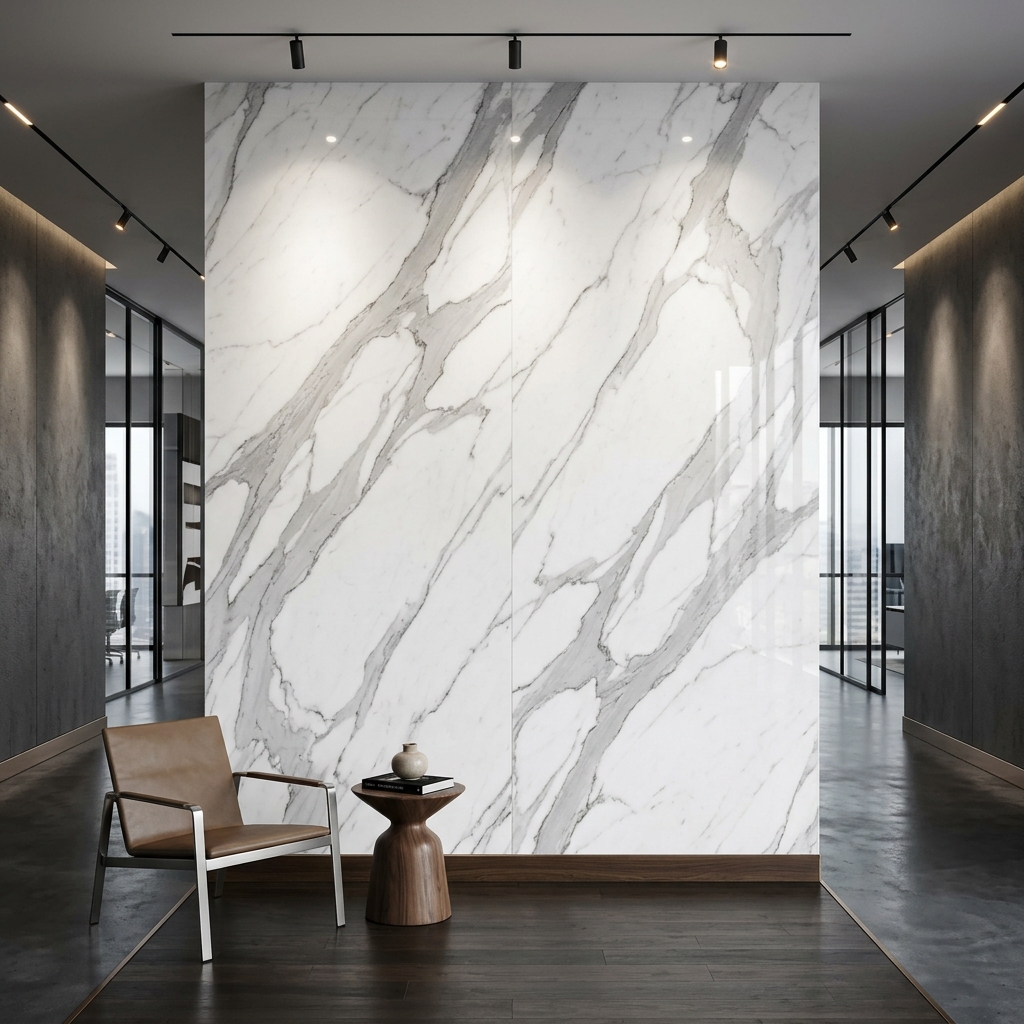
Statuario marble — the sculptural white that has defined luxury for centuries
| Variety |
Character |
Best For |
| Statuario |
Pure white with elegant grey veining, sculptural depth |
Master bathrooms, lobbies, feature walls, art installations |
| Statuario Extra |
Bright white with fine, defined grey veining — the purest grade |
Luxury bathrooms, statement pieces, bookmatching |
| Calacatta |
Bold dramatic gold/grey veining on bright white |
Feature walls, kitchen islands, accent pieces |
| Calacatta Viola |
Purple-grey veining, rare and dramatic |
Feature walls, master bathrooms |
| Carrara |
Soft grey veining on white, classic elegance |
Bathrooms, flooring, large areas |
| Botticino |
Warm beige with subtle veining |
Flooring, large surfaces, warm-toned interiors |
| Emperador |
Rich brown with cream veins (origin Spain) |
Libraries, studies, accent pieces |
Understanding the White Marble Hierarchy
The most common question we get: what's the difference between these white marbles? Statuario has a bright white base with fine, sculptural grey veining — it's the purest and most refined. Calacatta has bolder, more dramatic veining with gold or grey tones. Carrara is the most accessible, with a slightly grey base and softer veining. Each serves a different aesthetic — Statuario for purity, Calacatta for drama, Carrara for versatility.
5
Greek Marbles — Pure Elegance
Greece has been quarrying marble since antiquity — the Parthenon was built with Pentelic marble. Today, Greek quarries continue to produce some of the world's purest and most crystalline white marbles.
| Variety |
Character |
Best For |
| Thassos |
Ultra-pure crystalline white, minimal veining |
Bathrooms, minimalist spaces, backsplashes |
| Volakas |
White with grey-blue veining |
Flooring, bathrooms |
Turkish Marbles — Warmth & Character
Turkey is one of the world's largest marble producers, with quarries that yield warm, inviting stones. Turkish marbles offer an excellent balance of beauty and value, with distinctive warm undertones that create welcoming interiors.
| Variety |
Character |
Best For |
| Afyon White |
Warm white with honey veining |
Flooring, feature walls |
| Mugla White |
Clean white with subtle grey |
Bathrooms, countertops |
6
Rare & Exotic Marbles — For the Collector
For those who seek the truly extraordinary — marbles so rare that each slab is a collector's piece. These varieties are quarried in limited quantities and are sought after for their scarcity and breathtaking beauty.
| Variety |
Origin |
Character |
| Calacatta Paonazzo |
Italy |
White with violet and gold veining |
| Nero Marquina |
Spain |
Deep black with white veining |
| Rosa Portogallo |
Portugal |
Pink with darker veining |
| Blue de Savoie |
France |
Grey-blue with white veining |
| Green Guatemala |
India/Guatemala |
Deep green with white veining |
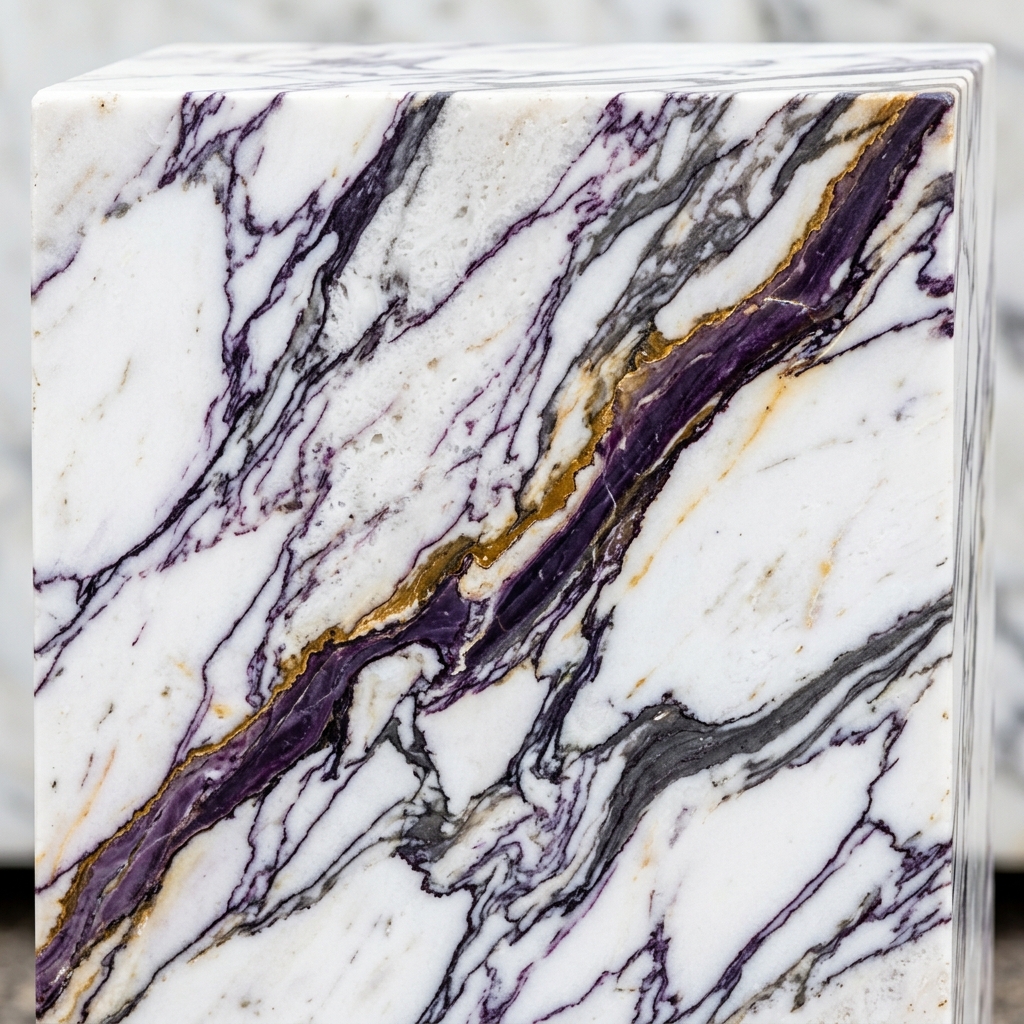
Calacatta Paonazzo — violet and gold veining on pristine white, nature's masterpiece
A rare marble slab is like a painting by nature — no two pieces will ever exist. When you find the one that speaks to you, that's your marble.
— Vogue Marmi
7
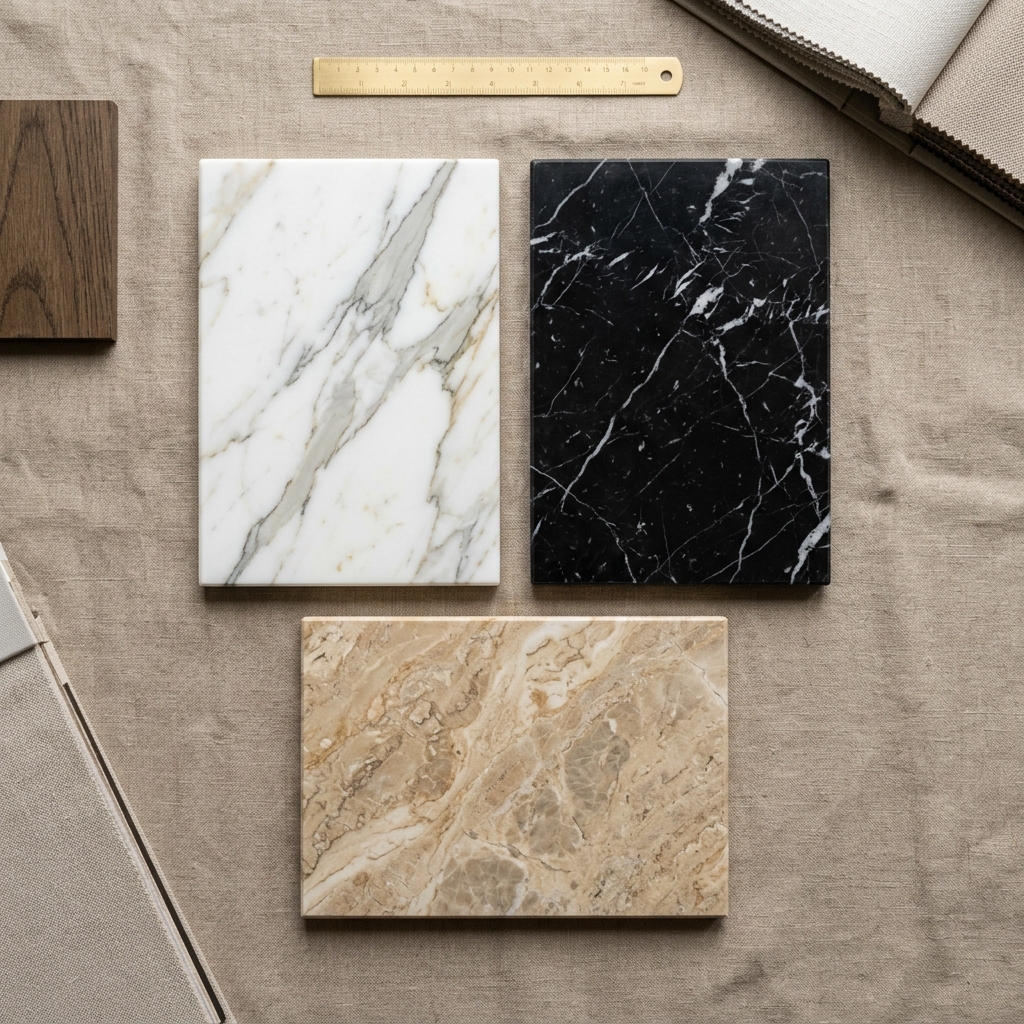
A curated selection of marble varieties — from Italian Calacatta to Spanish Nero Marquina
The variety of premium marble available today is extraordinary. From the warm honey tones of Afyon White to the dramatic black and white contrast of Nero Marquina, from the celestial purity of Thassos to the violet drama of Calacatta Viola — there is a premium marble that perfectly matches every design vision.
The key is to see these marbles in person. Photographs and screens cannot capture the depth, translucency, and subtle colour shifts that make premium marble so captivating. Visit a curated showroom where slabs are displayed in proper lighting, and you'll understand why marble has captivated humanity for millennia.
8
The right marble in the wrong application is a recipe for regret. Understanding which marble belongs where is the difference between a stunning home and an expensive mistake.
Flooring — The Foundation of Luxury
Marble flooring sets the tone for your entire home. The variety you choose and how it's laid can transform a space from ordinary to extraordinary. But not all marbles perform equally underfoot.
For high-traffic areas: Choose harder marbles — Botticino, Emperador, or polished Indian marbles. These varieties withstand daily foot traffic with grace. Minimum 18mm thickness is essential for structural integrity.
For low-traffic luxury: Statuario makes breathtaking foyers and master bedrooms — its pure white base and sculptural veining deserve spaces where they can be fully appreciated.
For large open areas: Botticino or Carrara provide elegant continuity without overwhelming. Their softer veining creates a serene, flowing aesthetic across expansive spaces. Statuario in large areas creates a gallery-like grandeur.
Pro Tip
Always see full slabs before selecting floor marble. Small samples lie — the veining pattern across a large floor is what creates the visual impact. A sample tile can look completely different from the same marble laid across a 500 sqft living room.
Kitchen Countertops — Beauty Meets Life
Best choices: Statuario (sculptural elegance), Calacatta (bold drama), or Botticino (warm sophistication). Each brings a different personality to your kitchen — from the pure refinement of Statuario to the warmth of Botticino.
The honest reality: Marble in kitchens requires commitment. Sealing every 6-12 months, immediate spill cleanup, and using cutting boards always are non-negotiable. Marble is softer than granite or quartzite, and acidic substances like lemon juice will etch the surface if not cleaned promptly.
The Kitchen Question
Many clients worry about using marble in kitchens. Our honest advice: if you're someone who loves cooking and entertaining, and you can embrace the gentle patina that develops over time, marble kitchens are magnificent. If minor etching would cause anxiety, consider marble for your island and a more forgiving surface for prep areas.
9
Bathrooms — Marble's Natural Home
Bathrooms are where premium marble truly shines. Limited exposure to acidic substances, naturally cool underfoot in warm climates, and stunning visual impact make bathrooms the ideal canvas for your finest marble selections.
Best choices: Statuario (pure luxury), Thassos (spa-like purity), Volakas (serene elegance). A full-slab Statuario bathroom creates a sanctuary that rivals the finest hotels in the world.
Note: Use honed finish for bathroom floors for essential slip resistance. Polished marble becomes dangerously slippery when wet.
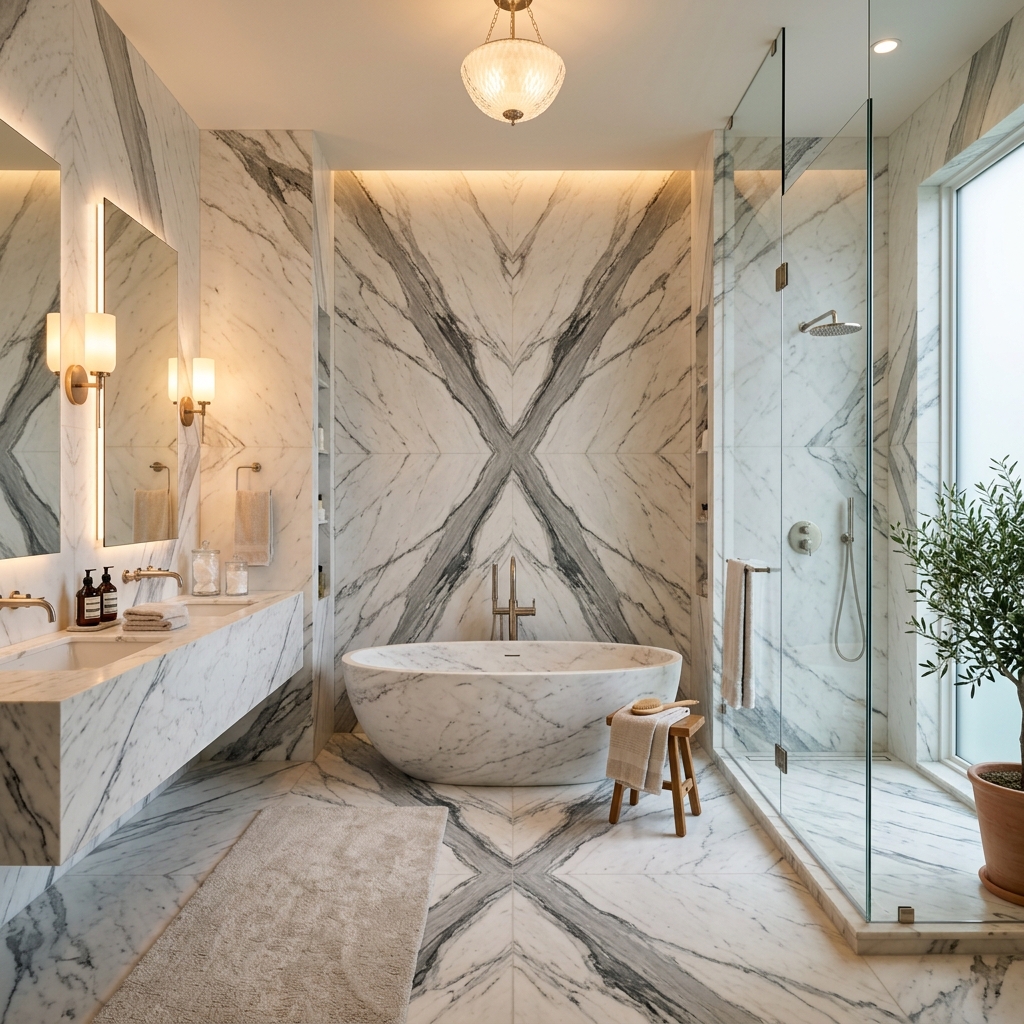
A master bathroom in bookmatched Statuario marble — pure, sculptural luxury
Feature Walls & Accent Pieces
This is where you can go bold. Feature walls are low-maintenance, high-impact — the marble is purely decorative, so you don't need to worry about spills, scratches, or heavy traffic.
Bookmatched Statuario slabs create mirror-image patterns that are truly art. Two consecutive slabs opened like the pages of a book produce symmetrical veining that transforms a wall into a gallery piece. The purity of Statuario's white base makes bookmatching particularly striking.
For dramatic colour statements, consider Calacatta Viola, Nero Marquina, or Rosa Portogallo. Fireplace surrounds are another ideal application — marble's natural heat resistance makes it both beautiful and functional.
Staircases & Lobbies
Choose harder varieties for staircases: Botticino, Emperador, or Statuario for durability. Consider anti-slip finishes for stair treads — safety is paramount, especially with polished stone.
Bookmatching on staircase walls creates flowing continuity as you ascend — a design technique that turns a functional space into a visual journey.
10
The same marble slab can look completely different depending on its finish. Your choice of finish affects not just aesthetics but maintenance, slip resistance, and longevity.
| Finish |
Look |
Feel |
Maintenance |
Best For |
| Polished |
High gloss, mirror-like, deepens color |
Smooth, cool |
High — shows etching more easily |
Feature walls, low-traffic floors, vanities |
| Honed |
Matte, soft, contemporary |
Smooth but not slippery |
Medium — hides etching better |
Bathroom floors, kitchen counters, modern interiors |
| Brushed |
Textured, aged, rustic luxury |
Slightly rough |
Lower — very forgiving |
Outdoor areas, rustic interiors, pool surrounds |
| Leathered |
Subtle sheen, textured |
Soft texture with grip |
Lower — excellent at hiding wear |
Kitchen countertops, high-traffic areas |
| Sandblasted |
Rough, dramatic texture |
Rough, non-slip |
Lowest |
Exterior cladding, outdoor flooring |
Our Recommendation
For most premium residential projects, we suggest polished for feature walls and vanities (maximum visual drama), honed for bathroom and kitchen counters (practical beauty), and consider leathered for kitchen islands (the best of both worlds).
How Finish Affects Color
Polishing deepens and enriches the marble's natural color by 20-30%. The polishing process creates a mirror-like surface that allows light to penetrate deeper into the stone and reflect back with greater intensity.
A Calacatta slab will look significantly more dramatic in polished versus honed finish. The golden veining becomes richer, the white background becomes brighter, and the overall contrast intensifies. The same slab in a honed finish will appear softer, more muted, and more contemporary.
Always request finish samples before committing — don't assume. Ask your supplier to show you the same marble variety in at least two finishes. The difference can be dramatic enough to change your entire design direction.
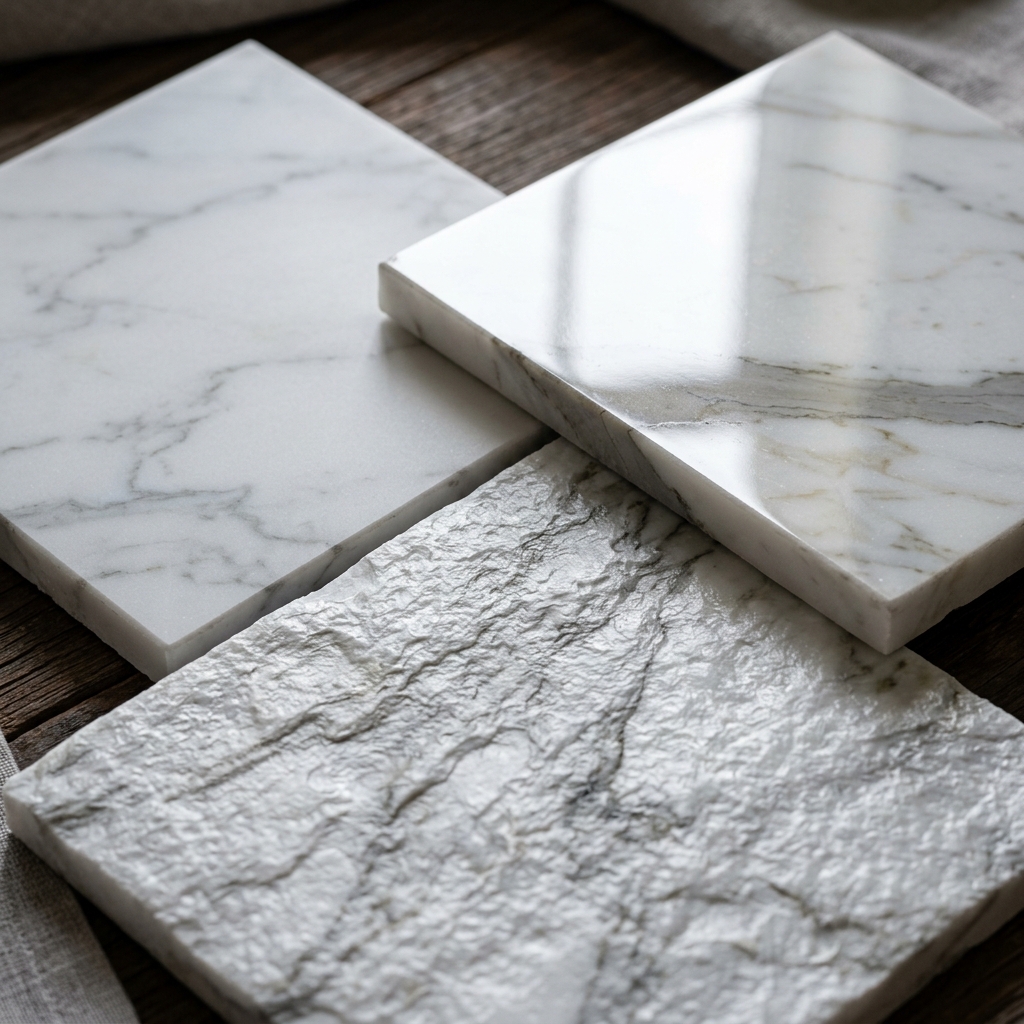
The same Statuario marble in three finishes — polished, honed, and leathered
11
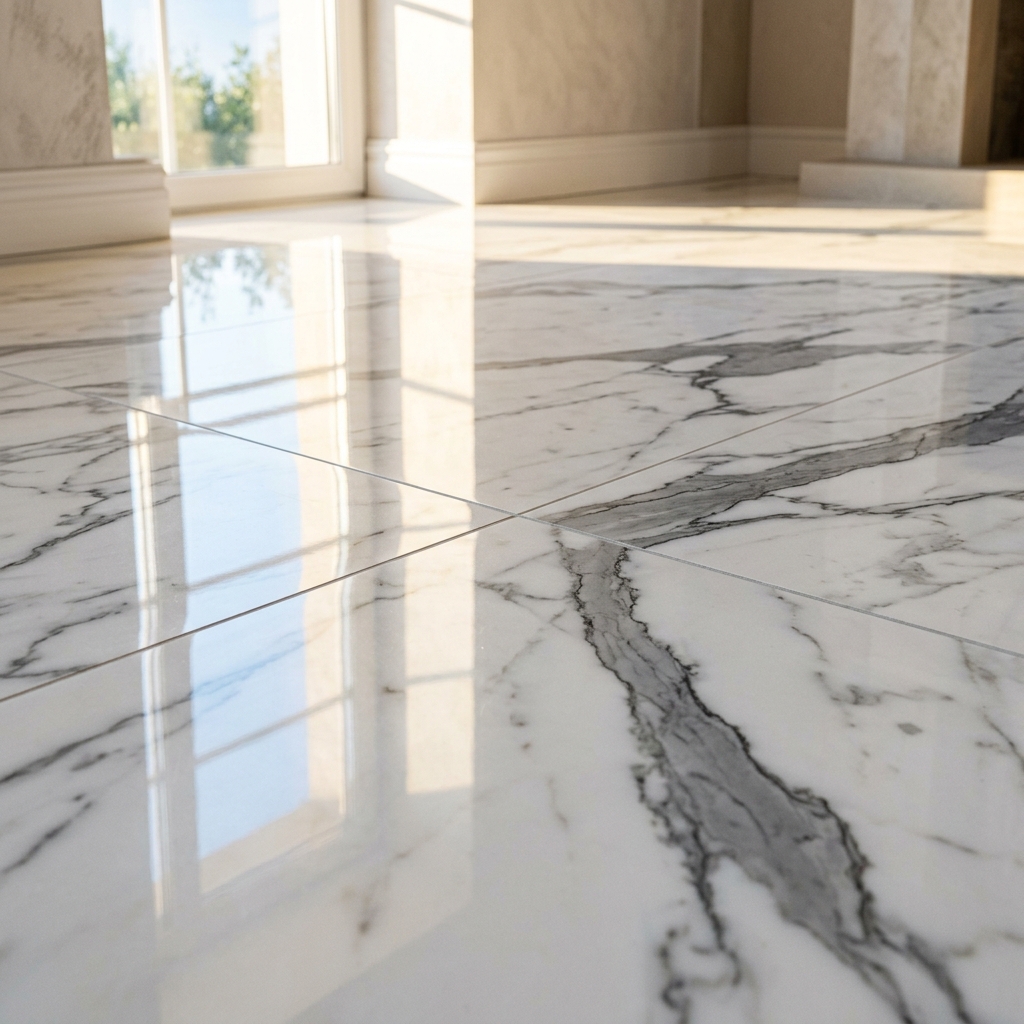
Polished Statuario reflecting natural light — the finish deepens every vein
Understanding finishes is one of the most underappreciated aspects of marble selection. Many homeowners focus entirely on the variety — Statuario versus Calacatta, Italian versus Greek — without considering how the finish will transform the final result.
A polished Statuario in a bright, south-facing bathroom will create a luminous, almost ethereal space. The same Statuario in a honed finish will feel calmer, more grounded, more contemporary. Neither is better — they simply create different moods.
When planning your marble project, think of the variety as the palette and the finish as the brushstroke. Together, they create the final masterpiece.
12
In a market where 'Italian marble' is loosely used, knowing how to verify authenticity protects your investment and ensures you get what you pay for.
The Authenticity Problem
The premium marble market, unfortunately, has its share of misrepresentation. Being aware of common issues helps you buy with confidence:
-
◆
Not everything labeled "Italian marble" comes from Italy
-
◆
Some dealers apply coatings to enhance veining temporarily
-
◆
Dyed marble exists — and it fades over time
-
◆
Engineered stone is sometimes passed off as natural marble
Tests You Can Do at the Showroom
1. The Water Test — Place a few drops of water on the surface. Genuine marble will absorb it within a few minutes. Engineered stone won't absorb at all.
2. The Scratch Test — A steel knife should be able to lightly scratch marble (hardness 3-4 on Mohs scale). If it can't be scratched, it may not be genuine marble.
3. The Acid Test — A drop of diluted vinegar on an inconspicuous area should cause a mild fizz (calcium carbonate reaction). No reaction = not marble.
4. The Light Test — Hold a torch behind a thin edge. Genuine marble has some translucency. Complete opacity suggests granite or engineered stone.
5. The Consistency Test — Real marble has natural imperfections and variation. If every slab looks identical, be suspicious.
Red Flags When Buying
-
✗
Deals that seem too good to be true for the variety
-
✗
Reluctance to show full slabs (only small samples)
-
✗
No origin documentation or quarry certificates
-
✗
"Italian marble" without specifying the exact variety
-
✗
High-pressure sales tactics — genuine quality sells itself
11
Always Ask For
Certificate of origin from the quarry, the exact variety name (not just 'Italian marble'), the slab thickness, and whether any chemical treatment or coating has been applied. A reputable dealer like Vogue Marmi provides all of this as standard.
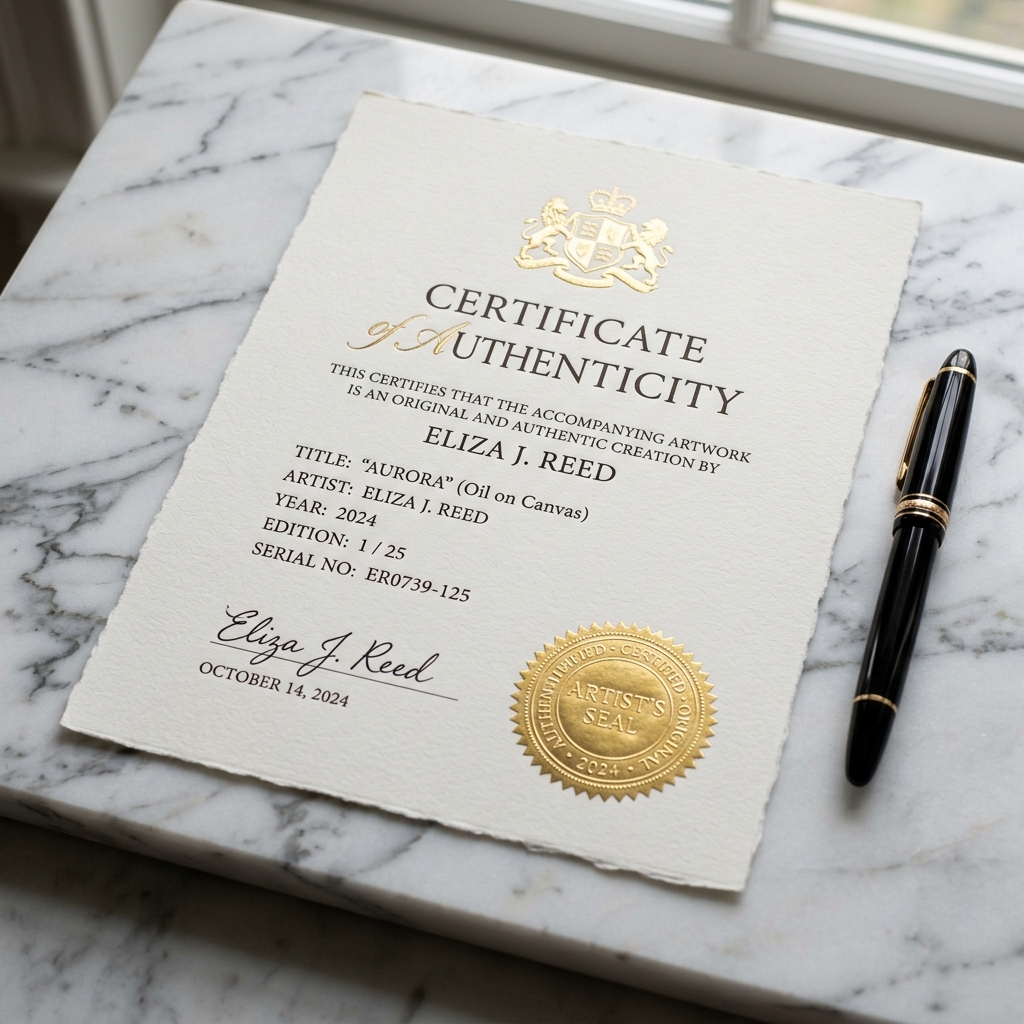
Authentic marble certification — quarry origin documents and quality verification
The best protection against inauthenticity is buying from a trusted, established dealer who stakes their reputation on every slab they sell. Ask to visit their warehouse, see full slabs, and request documentation. A dealer who is confident in their product will welcome your scrutiny — not deflect it.
12
Marble is not difficult to maintain — it simply requires mindfulness. Here's what living with marble actually looks like, day by day.
Daily Care
-
◆
Wipe surfaces with soft cloth and pH-neutral cleaner
-
◆
Clean spills promptly (especially wine, citrus, coffee, tomato sauce)
-
◆
Use coasters under glasses
-
◆
Use cutting boards — never cut directly on marble
-
◆
Use mats at entryways for marble floors
Weekly Care
-
◆
Dust mop marble floors (microfiber only)
-
◆
Clean with warm water and a few drops of pH-neutral stone cleaner
-
◆
Dry completely — don't let water pool
Annual Care
-
◆
Professional resealing — consult your supplier for current rates
-
◆
Inspection for any chips, cracks, or loose areas
-
◆
Professional polishing if needed (restores lustre)
-
◆
Annual maintenance visit — ask your supplier about maintenance packages
What to NEVER Use
-
✗
Vinegar, lemon, or any acidic cleaners
-
✗
Abrasive scrubbers or steel wool
-
✗
Generic bathroom cleaners (most are acidic)
-
✗
Bleach or ammonia-based products
-
✗
Steam cleaners directly on marble
11
The Patina Question
Over years, marble develops a gentle patina — subtle marks of a life well-lived. Many homeowners, especially those with Italian marble in kitchens, come to love this character. If you visit marble kitchens in European homes that have been in use for a century, you'll see surfaces that are more beautiful for having been lived with. Marble is not for perfectionists. It's for those who appreciate the beauty of a life well-lived.
Emergency Guide
Wine/coffee spill: Blot immediately (don't wipe), clean with pH-neutral cleaner. Wiping spreads the stain — blotting absorbs it.
Oil stain: Apply a poultice of baking soda and water, cover with plastic wrap, leave 24 hours. The poultice draws the oil out of the stone.
Etch marks: Light etching can be buffed with marble polishing powder. For deeper etching, call a professional — don't attempt to sand it yourself.
Chips: Save the chip — a professional can re-bond it almost invisibly. Keep it in a safe place and call your installer promptly.
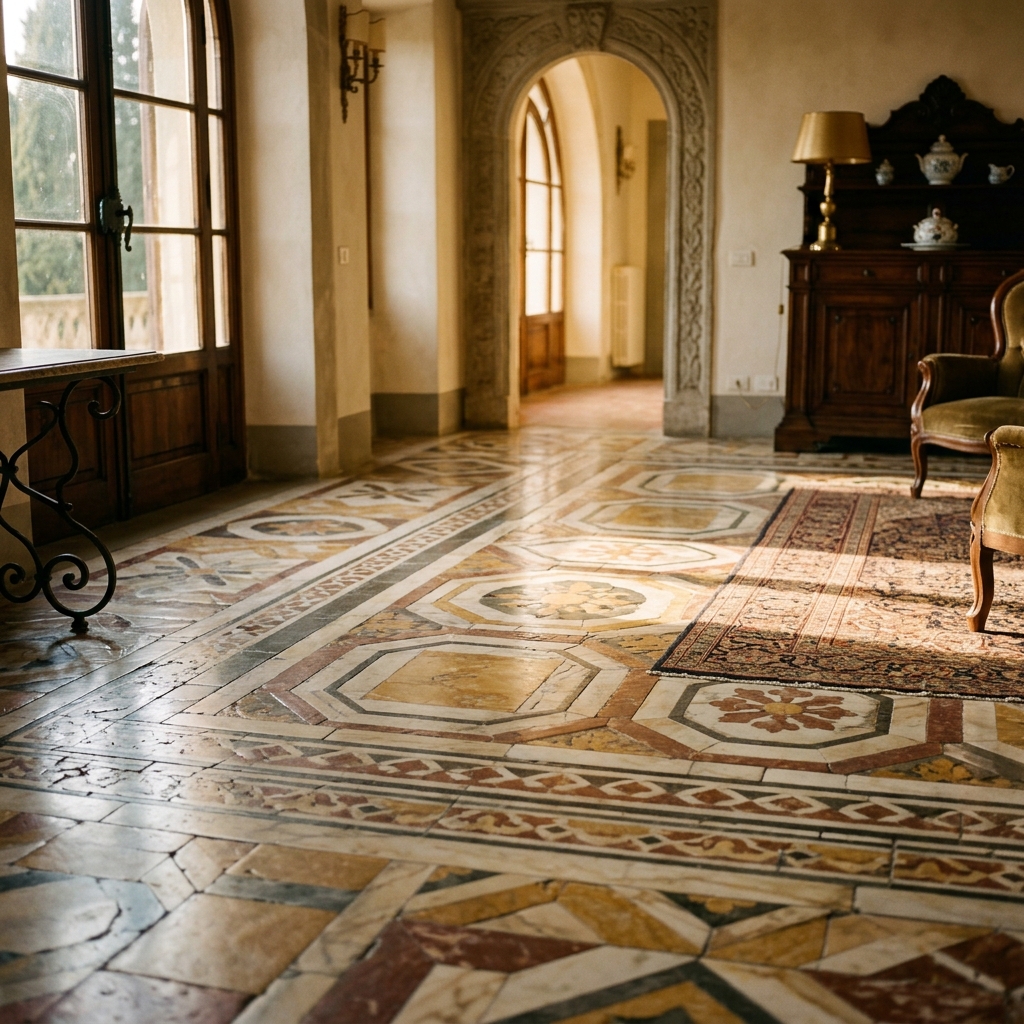
A century-old Italian marble floor — more beautiful for having been lived with
Living with marble is a relationship, not a chore. Like any beautiful thing in life, it rewards care and attention with enduring beauty. The homeowners who love their marble the most are those who went in with realistic expectations and a simple care routine.
12
How do I choose between Statuario, Calacatta, and other white marbles?
Statuario has a bright white base with fine, sculptural grey veining — it's the purest and most refined of the white marbles. Calacatta has bolder, more dramatic veining with gold or grey tones — it's a statement piece. Thassos is ultra-pure crystalline white with minimal veining — ideal for minimalist spaces. Choose Statuario when you want understated luxury, Calacatta when you want drama, and Thassos when you want pristine simplicity.
Is marble really suitable for Indian kitchens?
Yes, with caveats. Indian cooking involves turmeric, lemon, and oil — all of which can stain or etch marble. We recommend: honed or leathered finish (hides marks better), immediate cleanup habit, professional sealing every 6 months for kitchen marble. Many of our clients with marble kitchens love them — but they go in with eyes open about the maintenance commitment.
Will marble crack in Bangalore's climate?
Bangalore's moderate climate is actually ideal for marble. Marble is sensitive to extreme temperature fluctuations, which Bangalore doesn't experience. Proper installation with appropriate adhesive and expansion joints is more important than climate.
How much marble do I need for my project?
Measure your area in square feet, then add 10-15% for wastage (cutting, breakage, pattern matching). For bookmatched installations, you may need 20% extra. We recommend having Vogue Marmi do a site visit to provide an accurate estimate.
Can I use marble outdoors?
Yes, but choose the right variety and finish. Honed or brushed finishes for slip resistance. Avoid pure white marbles in direct sun (can yellow over time). Emperador and Botticino perform well outdoors. Ensure proper drainage to prevent water pooling.
11
What's the difference between marble tiles and marble slabs?
Slabs are large pieces (typically 6x3 ft or larger) cut from a single block — they offer continuous veining and minimal joints. Tiles are smaller pre-cut pieces with visible joints that interrupt the veining pattern. For feature walls and countertops, always use slabs. For large floor areas, tiles can work beautifully and are a practical alternative.
How long does marble last?
With proper care, marble lasts centuries — literally. The Taj Mahal's marble is over 400 years old. In homes, marble floors and walls can last the lifetime of the building. Countertops may need re-polishing every 5-10 years. Marble is one of the few home investments that genuinely lasts forever.
Does marble increase property value?
Yes, significantly. Premium marble (especially Italian varieties) is recognized as a luxury material globally. Homes with genuine marble flooring and features consistently command higher resale values, particularly in premium segments. It's not just a purchase — it's an investment.
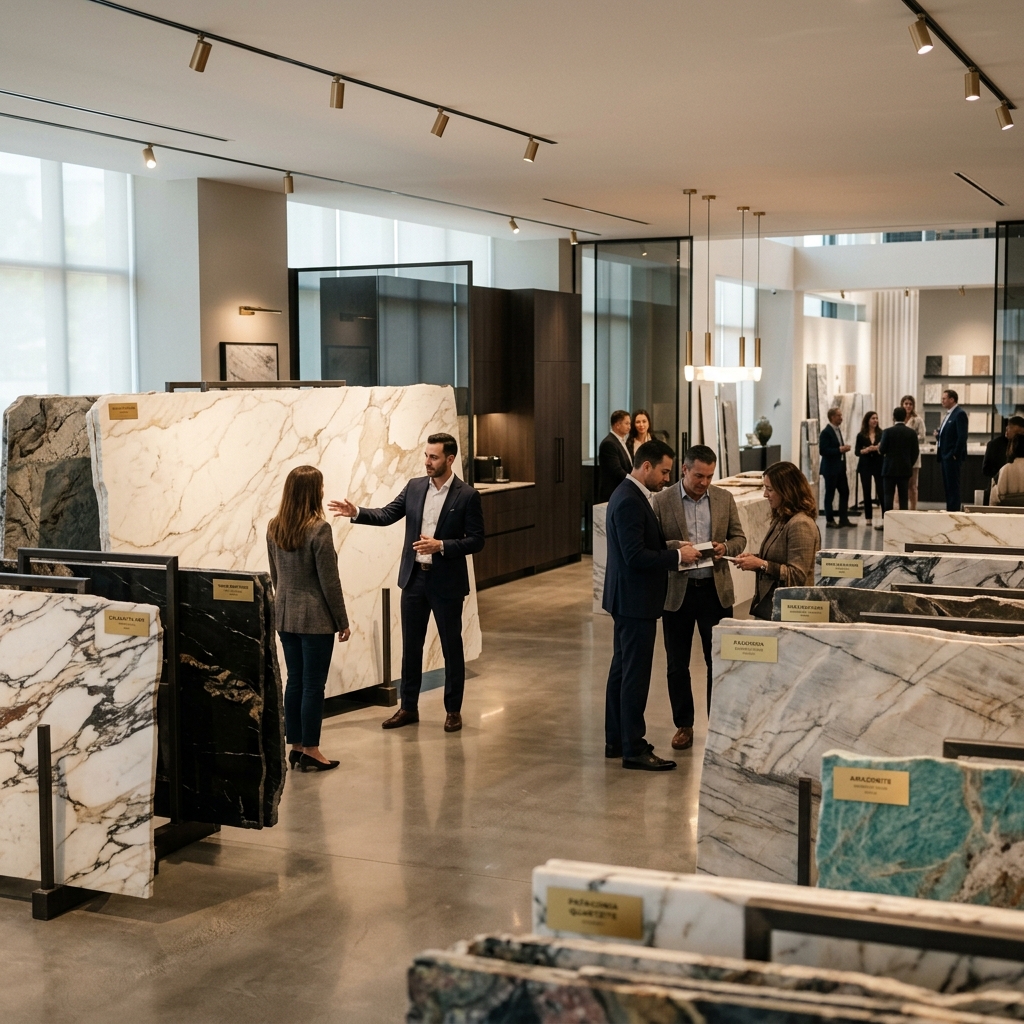
Our stone consultants answer your marble questions at the Vogue Marmi showroom
12
Before you visit the showroom, arm yourself with this checklist. It will ensure you ask the right questions and make a decision you'll love for decades.
Before You Visit
- Define your scope — which areas will feature marble
- Measure all areas where marble will be used (add 10-15% for wastage)
- Decide on the look you want — dramatic veining or subtle elegance?
- Research varieties that suit your application and aesthetic vision
- Collect inspiration images of marble interiors you love
At the Showroom
- View full slabs, not just samples — veining varies dramatically
- Ask for the exact variety name and origin
- Request certificates of authenticity
- Check slab thickness (20mm for counters, 15-18mm for floors)
- View the marble in natural light — showroom lighting can be misleading
- Ask about available finishes for your chosen variety
- If bookmatching, verify consecutive slabs are available
Before You Commit
- Get a detailed quote including fabrication, transport, and installation
- Confirm the installer's experience with premium marble specifically
- Ask about sealing — what product, when, and who does it
- Understand the return/replacement policy for damaged slabs
- Request a maintenance guide specific to your marble variety
- Confirm timeline for delivery and installation
11
After Installation
- Inspect all surfaces before signing off
- Ensure initial sealing is done before first use
- Set calendar reminders for annual resealing
- Keep a small piece of your marble for future matching if needed
- Keep the care instructions accessible for household staff
Ready to Choose Your Marble?
Visit the Vogue Marmi showroom in Bangalore to explore our curated collection of premium marbles from Italy, Greece, Turkey, and beyond. Our stone consultants will guide you through the selection process — from choosing the perfect variety to final installation.
Book a Private Consultation
Vogue Marmi — Curators of Fine Stone | Bangalore
The marble you choose today will tell your story for generations.
— Vogue Marmi
12